
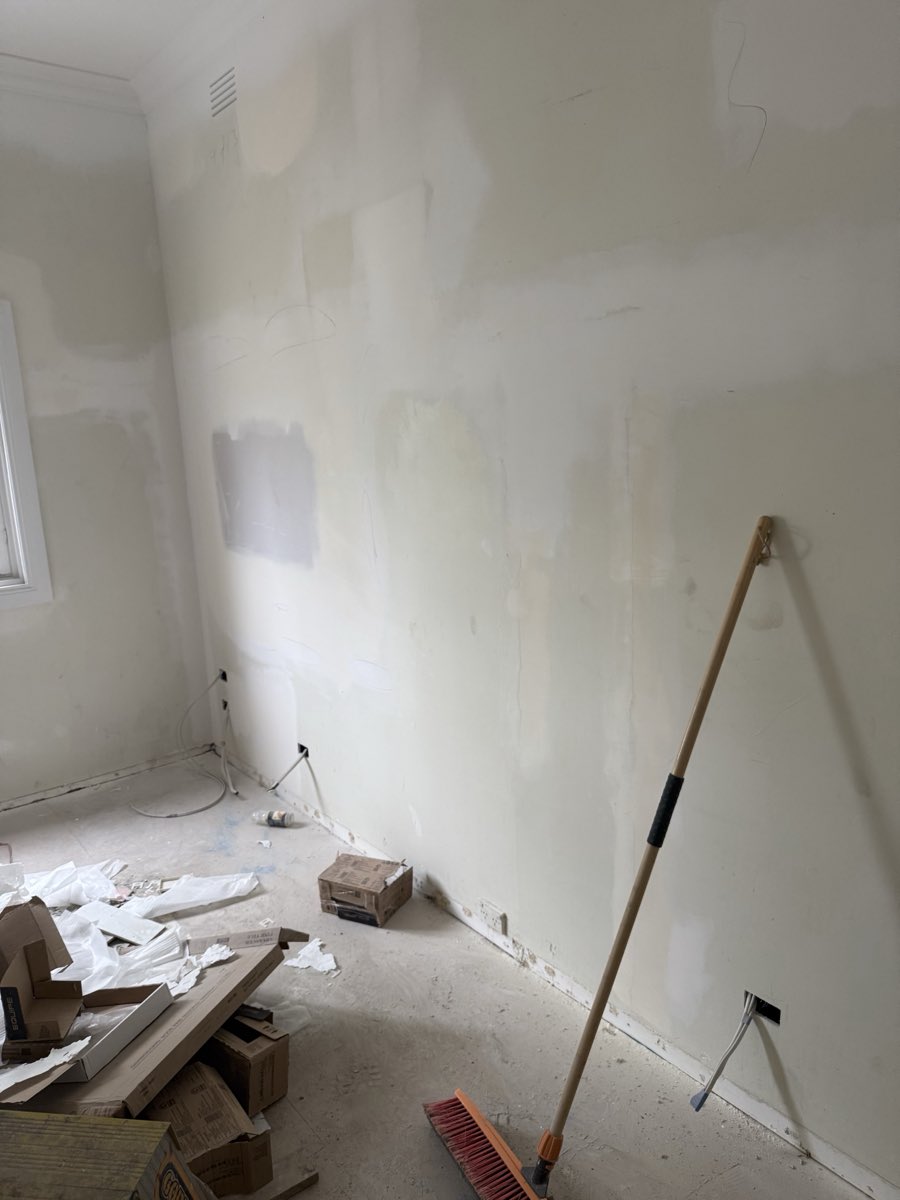
An undercoat provides a more uniform base for the finish. A stain blocker is formulated to stop specified stains migrating through the paint. Some products combine these roles, but no label makes a coating suitable for every surface or stain.
Primer, sealer, undercoat and stain blocker compared
Choosing the preparation coat starts with the problem underneath the paint. New plasterboard, a glossy door and a dry water mark may all be painted white, yet they need different decisions before the finish goes on.
For a Melbourne repaint, the useful question is not simply "Which brand is best?" It is "What does this surface need the preparation coat to do?"
The functions overlap. A primer-sealer-undercoat may perform several jobs in one product. It does not necessarily mean three separate preparation coats are needed.
Haymes explains the adhesion and base-coat roles in its interior paint FAQs, and its Ultracover product information is one example of a combined preparation product.
Use those names to understand the roles, then read the specification for the exact product being proposed.
| Preparation coat | Purpose and suitability checks |
|---|---|
| Primer | Help the specified paint system adhere to the substrate. Check: whether it suits bare timber, metal, an existing coating or another identified material. |
| Sealer | Reduce or equalise absorption on a suitable porous surface. Check: whether the surface is sound and the product is specified for that material. |
| Undercoat | Create a consistent base and improve hiding beneath the finish. Check: compatibility with the primer or existing coating and the intended topcoat. |
| Stain blocker | Isolate the types of staining listed for that product. Check: the stain source, surface condition and whether the formula is rated for that stain. |
interior paint FAQs · Ultracover product information
How do you choose the right preparation coat?
Work through these questions before deciding what to buy or include in a quote:
A useful specification explains the reason for the prepcoat, not just its brand. "Preparation included" is less informative than identifying where bare patches will be primed or which stains need a separate treatment.
- What is the surface? Identify the material and whether it is bare, repaired or already painted.
- What condition is it in? Check for loose coating, contamination, uneven absorption or unresolved moisture.
- What must the preparation coat achieve? Adhesion, sealing, colour hiding and stain isolation are different requirements.
- What finish will go over it? Confirm compatibility with the intended topcoat and interior or exterior exposure.
- What does the product require? Check preparation, application, coverage, coat count and the permitted interval before recoating.
Does new plasterboard need a sealer?
New plasterboard includes paper facing and jointing compound, which can absorb coatings differently. Gyprock recommends a suitable plasterboard primer-sealer as part of its painting system. That helps address the difference between the board and the joints; it does not correct poor finishing or physical ridges.
A repaired area also needs to be considered alongside the surrounding painted wall. The size of the repair, surface texture and selected coating system influence whether local treatment is enough and how far the finishing coats should extend.
For the full surface-preparation sequence, see our new plasterboard painting guide.
Gyprock painting and decoration guidance · new plasterboard painting guide
Do previously painted walls always need primer?
Not every sound repaint needs a complete new priming coat. Dulux's interior preparation guidance allows repainting surfaces in good condition after the required cleaning and filling, while identifying additional preparation for glossy or previously unpainted surfaces. The intended topcoat's instructions still govern the actual system.
Avoid deciding from colour alone. Two walls may look similar while one has exposed filler and the other has an intact coating. Ask the painter to identify which areas need a preparation coat and why.
An undercoat can help when changing a dark colour to a light finish, but colour hiding is not the same as stain blocking. A dark blue wall and a brown mark returning through white paint are different problems.
Dulux interior preparation guidance
What about glossy doors and timber trim?
For an existing glossy finish, check adhesion and product compatibility before adding another coating. The current finish, its condition and the intended replacement all matter. A specialist adhesion primer may be appropriate where the specified system calls for one; it is not a substitute for the required cleaning and surface preparation.
Ask what is known about the existing coating rather than assuming every older door is the same. Haymes provides guidance for priming over oil-based finishes in its interior paint FAQs. The exact product directions should decide the system, not a blanket rule that water-based paint can never go over an older oil-based finish.
When is a stain blocker needed?
Consider a stain-blocking system when identified staining may migrate through the new finish. Dulux describes stain migration as movement through the topcoat and recommends cleaning away as much contamination as possible while ensuring the substrate is sound. The selected product must match the staining involved.
A stain blocker is not a leak repair, a replacement for damaged plaster or a way to avoid necessary cleaning. An old, dry water mark and an actively damp ceiling require different next steps. Establish and address the moisture source before specifying the repaint.
Smoke-related contamination also needs assessment before a coating is chosen. Do not assume a product suitable for one light mark will manage every smoke or odour problem. Our separate guides explain water-damage stain painting and smoke-stain sealing.
For timber discolouration, the cause matters too. Dulux's tannin guidance describes both stain-resistant water-based and solvent-based primer options after suitable preparation. This is why "all stain blockers must be oil-based" is too broad a rule.
Dulux PRECISION preparation guidance · water-damage stain painting · smoke-stain sealing · Dulux Trade tannin-staining guidance
Can primer or undercoat replace the finishing paint?
Do not treat a preparation coat as the final finish unless the product specifically permits that use. Check which topcoats are compatible and when they should be applied. A surface that looks evenly white after undercoating is not, by appearance alone, a completed paint system.
The same applies outdoors: confirm that the preparation product is suitable for exterior exposure and the relevant surface. For metal, ask about a coating system specified for that metal and its condition, rather than assuming an ordinary wall prepcoat is suitable. Dulux lists a separate metal primer within its preparation range.
How long should primer dry before painting?
There is no single waiting time for every primer, undercoat or stain blocker. Use the current product label or technical data sheet, including its temperature, humidity, ventilation and recoating conditions. Touch-dry and ready for the next coat are not automatically the same thing.
When comparing quotes, ask which preparation product is allowed for and how its recoating requirements fit the work sequence. Do not choose the schedule first and assume every product will fit it.
Questions to ask before a Melbourne repaint
Whether the home is in Fitzroy, Brunswick or another Melbourne suburb, describe the surfaces and their history. Mention repairs, stains that have returned, known water entry and any details of previous coatings.
Ask for the written scope to clarify:
For broader quote comparisons, use our Melbourne painting quote guide.
- Which surfaces need priming, sealing or stain blocking.
- Whether treatment is local or across a complete surface.
- The preparation product or agreed system and why it is suitable.
- Which repairs or moisture investigations must happen first.
- The intended finishing coats and any exclusions.
Melbourne painting quote guide
Common questions
Are primer and undercoat the same thing?
Their roles overlap, and some products combine them. Primer primarily addresses the bond to a suitable substrate; undercoat provides the base beneath the finish. Check the particular product rather than treating the names as interchangeable.
Will ordinary white paint stop a stain coming back?
Colour coverage alone does not establish stain resistance. Identify the cause and select a system rated for the stain. More finishing paint is not a substitute for that assessment.
Can one primer-sealer-undercoat do everything?
It may cover several preparation needs on approved surfaces. Check its limits: difficult adhesion, particular stains or a different substrate may require another product or preparation method.
Should a wet ceiling be covered with stain blocker?
No. Resolve the moisture source and assess the ceiling's condition before repainting. A blocking coat does not demonstrate that the ceiling is dry, sound or repaired.
Ask Pars Painting Melbourne about your surface
Send Kian photos, your suburb and a description of what you want painted. Mention any staining, patches, glossy trim or known moisture problems. For a suitable small job, those details can support an initial estimate; larger or unclear jobs may need a visit. The final written quote is confirmed after Kian reviews the scope, condition and access.
Call 0402 242 442 to discuss your project, or see our interior painting services.