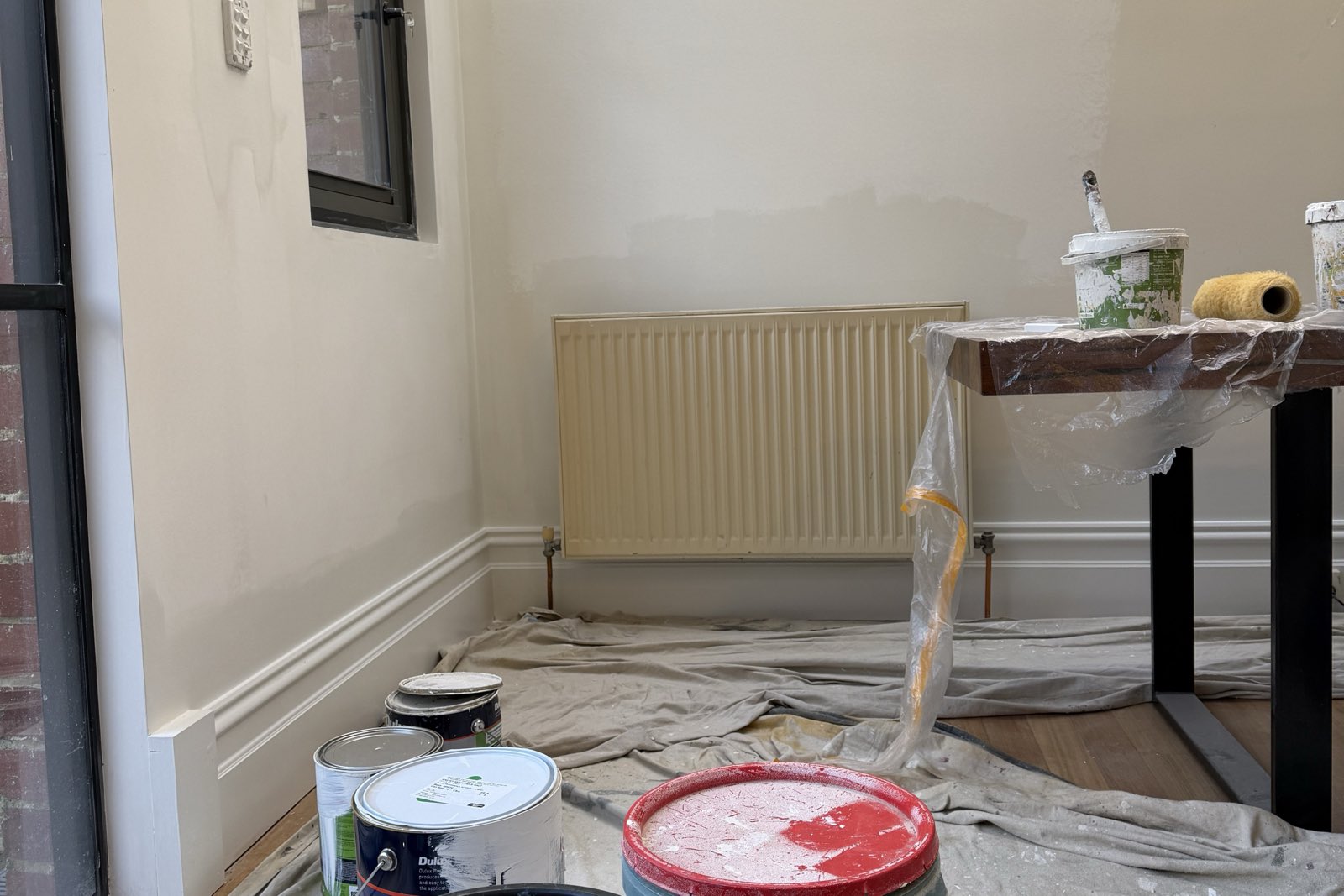
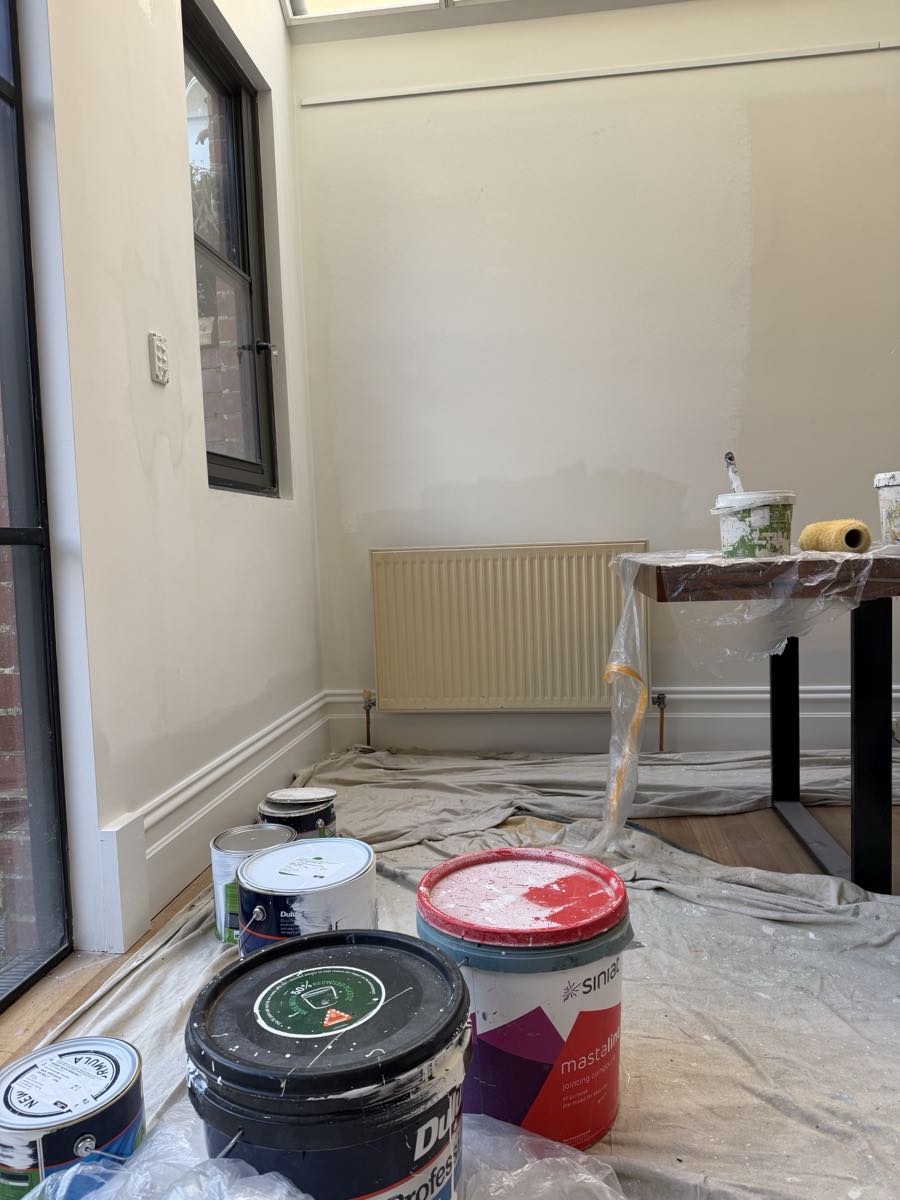
This guide sets out what a quote has to state before two of them can be read side by side, what Victorian consumer law actually requires for painting work, and how to prepare a property so the scope is accurate.
1. What a comparable quote has to state
Ask every painter for the same items in writing. If one quote omits an item the others include, that is the difference to ask about before comparing totals.
- Surfaces, room by room. Walls, ceilings, cornices, doors, door frames, skirting, architraves, windows, wardrobes and any exterior elements should be listed rather than summarised as "the house".
- Preparation. Washing, scraping, sanding, filling, spot priming and how failed edges will be treated.
- Coats per surface. Two coats over an existing sound finish is a different job from a primer plus two coats over bare or repaired material.
- Products and finish. The coating system and sheen level for each surface type.
- Exclusions. What is deliberately not included, which matters more than the inclusions.
- Access and protection. How furniture, floors, fixtures, gardens and neighbouring surfaces are protected, and any equipment needed to reach height.
- Making good. Whether repairs to damaged material are inside the quote or a separate item.
- Payment terms. Any deposit, when the balance falls due and what triggers each payment.
- Who does the work. Whether the people quoting are the people painting.
2. Why two quotes for "the same job" can differ so much
In our experience, painting labour is mostly preparation, so a quote's total is driven by decisions that are invisible in a one-line description. The common causes of a large gap are:
- one quote includes ceilings, trims or wardrobes and the other does not;
- one allows for removing failed coating back to a sound edge and the other plans to coat over it;
- one includes a primer on bare or repaired areas and the other assumes a straight repaint;
- one has priced protection and daily reinstatement for an occupied home;
- one has allowed for the access equipment a two-storey or steeply sloped site needs.
None of these makes a quote wrong. They make the two quotes descriptions of different work.
3. Decision criteria: choosing between quotes
Once the scopes match, these are the criteria worth weighting, roughly in order:
- Scope completeness. Does the document describe the finished result precisely enough that a disagreement later could be settled by reading it?
- Condition assessment. Did the painter look at the actual surfaces, or price from a floor plan and a photograph alone?
- Honesty about boundaries. A quote that names what it excludes, and what needs another trade first, is more reliable than one that implies painting solves everything.
- Preparation detail. Preparation is often where durability is decided, and where an under-priced quote usually economises.
- Payment structure. Terms proportionate to the work, not a large sum requested before anything starts.
- Written communication. Whether questions get specific written answers.
- Price. Last, and only between quotes that describe the same work.
4. What Victorian rules require for painting work
This surprises many homeowners, so it is worth stating plainly. Consumer Affairs Victoria requires a major domestic building contract in writing for domestic building work worth more than $10,000. Painting is one of the trades explicitly listed as not requiring that contract when it is the only work being carried out. Consumer Affairs Victoria's guidance states that a major domestic building contract is not required for jobs involving only one of a listed set of trades, and painting is named in that list — subject to the owner-builder and wider-project situations set out below.
What that means in practice:
- If the client is an owner-builder named on the building permit, Consumer Affairs Victoria separately says the tradesperson must use a major domestic building contract for work worth more than $10,000. That owner-builder framework is set out on the pages linked below, and under it Consumer Affairs Victoria also lists separate Building and Plumbing Commission (BPC) registration and domestic building insurance duties; check the owner-builder section of the official source for the current thresholds and how they apply.
- That is not a reason to accept work without a written scope. A specific written quote is clearer evidence of what was actually agreed than a verbal one, and the consumer guarantees and other legal rights described below can apply to the work independently of whether a major domestic building contract was required.
- If painting is part of a wider renovation involving other trades, the wider job may fall under the major domestic building contract rules even though painting alone would not.
If a painter tells you a painting-only job does or does not require a major domestic building contract, ask which condition or exception they believe applies, then verify the answer with Consumer Affairs Victoria or a qualified adviser. The Consumer Affairs Victoria pages are linked at the end of this guide.
When this was checked, and what is changing. The Consumer Affairs Victoria pages linked at the end of this guide were checked on 4 September 2026 and describe the rules as they stand on that date. Victoria has passed amendments to its domestic building contract laws, and Consumer Affairs Victoria states they are scheduled to commence no later than 1 December 2026 — read the official notice on new domestic building contract laws passed in Victoria alongside the source pages before relying on any of this.
This is a description of published guidance, not legal advice, and this page cannot tell you whether any particular rule applies to your job. Whether a specific painting-only job falls inside or outside these rules should be confirmed with Consumer Affairs Victoria or a qualified adviser.
5. Deposits and payments
For contracts that are domestic building contracts, Consumer Affairs Victoria states the deposit cannot be more than 10% for contracts under $20,000 and 5% for contracts of $20,000 or more. Those limits are recorded here because they are what the published guidance says, and for no other reason. Painting-only work generally sits outside those contract rules, so this guide does not present the limits as a benchmark, a norm or a standard for a painting quote, and you should not read them as one. Whether either limit applies to a specific painting job is a question for Consumer Affairs Victoria or a qualified adviser rather than for this page.
What you can do without an interpretation of the law is ask about the deposit directly.
- Ask what a deposit is actually for. Materials ordered for the job is an answer; "to secure the booking" alone is weaker.
- Be cautious about a large payment demanded before any work or material has been provided.
- Prefer payments tied to identifiable stages over open-ended progress claims.
- Keep the written quote, any variation and every receipt together.
6. Preparation: what should happen before the first finish coat
A repaint's durability is largely decided before any finish coat is applied. A quote should make the following visible rather than leaving them to be assumed.
- Cleaning. Dirt, chalking, grease and biological growth reduce adhesion and need removing.
- Removing unstable coating. Loose or peeling paint is scraped and feather-sanded back to a sound edge, not painted over. Our guide to why paint peels covers the causes.
- Filling and sanding. Which defects are inside normal preparation and which are repairs.
- Priming. Bare substrate, repairs and some existing finishes need an appropriate primer before finish coats.
- Moisture. A damp surface is not ready. Active moisture has to be resolved by whoever is responsible for it first — see the mould-affected repainting guide.
- Protection. Floors, fixtures, joinery, glass, gardens and paving.
7. Where painting work stops
A painter is not the right trade for every problem found on a wall. Work that normally sits outside a painting scope, and should be identified before quoting rather than discovered mid-job, includes:
- leak detection and leak repair;
- moisture testing or certifying that an area is dry;
- mould assessment and remediation;
- asbestos identification, testing or removal;
- structural diagnosis and structural repair;
- replacing decayed timber, failed render or damaged plasterboard;
- waterproofing.
A quote that silently absorbs one of these is not a better deal. It usually means the item has not been priced.
8. Preparing your property so the quote is accurate
Before the assessment, gather what a painter needs to scope the work without guessing:
- a list of rooms and the surfaces you want painted in each;
- clear photographs of each room or elevation, plus close-ups of anything damaged;
- whether the property is occupied, tenanted, vacant or being prepared for sale;
- your colour and sheen direction, or a note that you would like guidance;
- known problems — leaks, past repairs, recurring stains, previous coating failures;
- practical constraints: parking, access, stairs, working hours, pets, building rules and any body corporate requirements;
- your timing, and whether any date is fixed by a lease, settlement or sale campaign.
Sending the same information to every painter is what makes the resulting quotes comparable.
9. Timing and Melbourne conditions
Interior work can proceed year-round with adequate ventilation and drying time. Exterior work depends on the surface being clean, sound and dry, on the temperature and humidity staying inside the coating manufacturer's stated limits, and on there being enough time before evening dew. Melbourne's rainfall days continue through spring while solar exposure climbs toward summer, so a warm day is not automatically a suitable painting day. The exterior preparation guide sets out how to read a forecast against a product data sheet.
10. Signs worth pausing on
- A total with no itemised scope behind it.
- A quote given without anyone examining the surfaces, where the provider cannot explain how condition affects the scope.
- Pressure to decide immediately, or a discount that expires the same day.
- A large upfront payment before materials or work.
- Reluctance to put an answer in writing.
- No written exclusions at all.
- A promise that painting will resolve damp, mould or a leak.
11. How Pars quotes a Melbourne painting job
For transparency, this is the process behind our own quotes.
- You can send photographs yourself through WhatsApp so Kian can see the job before he visits. Photos are background for the visit, never a price.
- Kian comes to the property and looks at it himself. Surfaces whose condition matters are reviewed on site before a scope is confirmed, and the price is worked out from what he sees there.
- You receive a written painting scope — surfaces, preparation, coats and exclusions — before any work is scheduled.
- Work outside painting is named rather than absorbed. Where another trade or a specialist is needed first, we say so.
- Where a project is quoted with a documented handover, we provide handover photographs of the quoted areas.
You are welcome to use this page's checklists when comparing our quote against anyone else's. That is what it is for.
12. Frequently asked
Should I always choose the most detailed quote? Not automatically, but a detailed quote is easier to hold someone to. Detail can be evidence that the work was actually thought about.
How many quotes should I get? Enough to see whether the scopes agree. If two quotes describe the work very differently, a third usually shows which reading is normal.
Is a verbal quote enough? A verbal quote can form part of a valid agreement, but written scope, price, exclusions and payment terms are easier to compare and rely on.
Can a painter price my job from photographs alone? Some will. Pars does not. Photographs show the general scale of the work and are useful background, but surface condition drives the preparation, and condition is what a photograph is least reliable about. Kian looks at the property himself and prices it from what he finds there.
What if extra work is found once painting starts? It should be raised, described and priced in writing before it proceeds, not added to the final invoice.
Sources
The Victorian requirements described above come from Consumer Affairs Victoria. Check them directly rather than relying on any painter's summary, including this one:
- Consumer Affairs Victoria — what work requires a building contract, including the trades exempt from the major domestic building contract requirement and the owner-builder contract, registration and insurance conditions.
- Consumer Affairs Victoria — giving quotes: tradespeople and small works, on what a quote should cover and the consumer guarantees that apply regardless of how it was given.
- Consumer Affairs Victoria — deposits and payments for building work.
- Consumer Affairs Victoria — new domestic building contract laws passed in Victoria, the notice of the amendments scheduled to commence no later than 1 December 2026.
- Bureau of Meteorology — Melbourne Airport climate statistics, for seasonal planning context.
Product application limits come from the label and current data sheet of the coating actually being used, and differ between products.
Next: the house painting quote-factors guide explains what drives a total, and the full Melbourne painting guide index lists the rest.