
Primer matters because the plasterboard face and joint compound can absorb paint differently. Rushing or spot-priming only the joins can leave visible bands or patches.
Preparing the surface
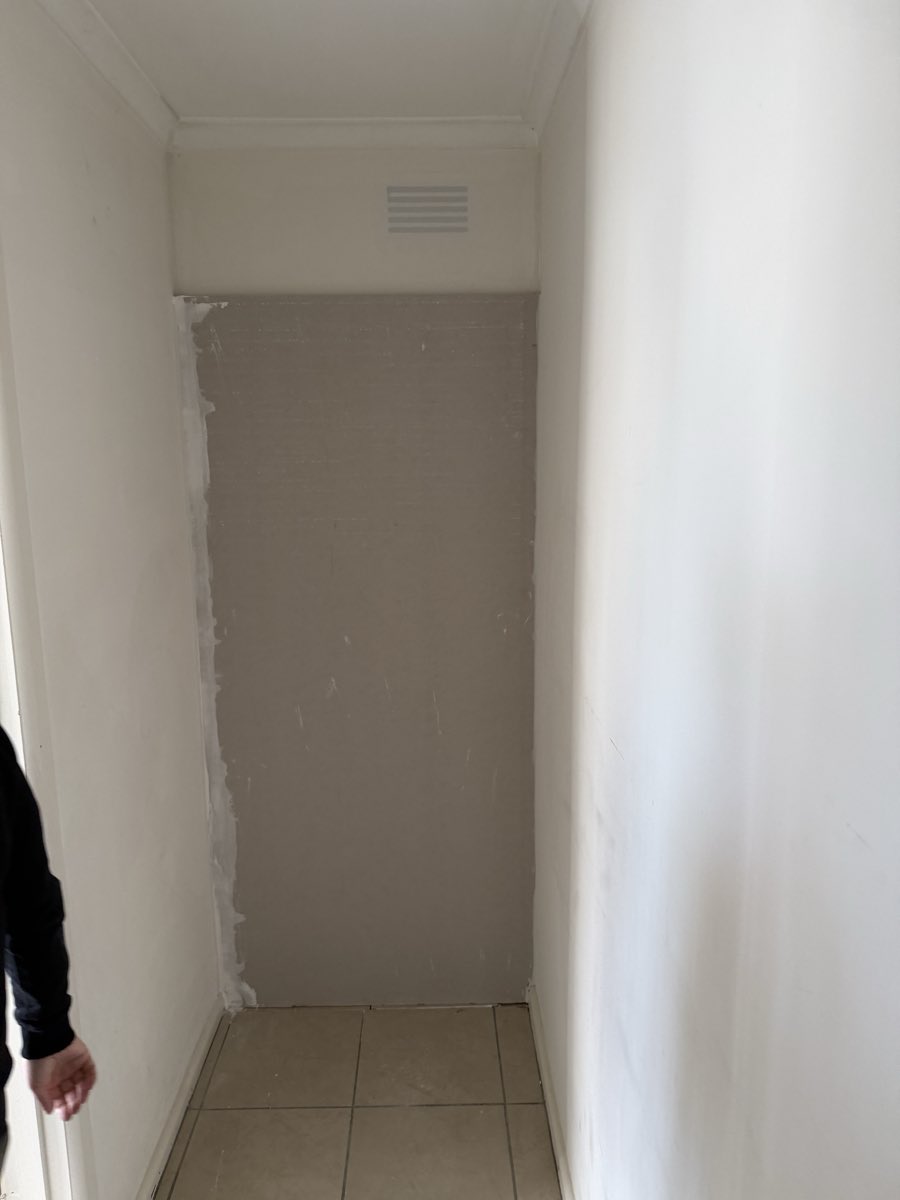
*Illustrative image generated for this draft; it does not depict a Pars Painting Melbourne project.* New plasterboard can look flat and uniform before painting, yet the finished wall may show joint lines, dull patches or changes in sheen. The reason is often that a new sheet is not one perfectly uniform surface: the paper face and the compound over joints and fixings can take up paint differently. Careful preparation and the right sealer help create a more consistent base.
What should happen before the first coat?
Start with the condition of the surface, not the colour. Check that jointing work is complete and dry, that fixings and joins are finished to the intended level, and that there are no ridges, loose paper, dents or powdery areas. Follow the compound and coating manufacturers’ instructions for drying, sanding and recoating. A paint coat cannot hide a proud joint or an uneven edge; under light from a nearby window, even small surface variations can cast shadows.
Remove sanding dust using a method suitable for the material and site. Avoid applying sealer over loose dust, damp compound or damaged paper. If the paper face has been torn or the board is soft, swollen or water-damaged, pause and establish whether repair or replacement is needed before decorating.
Why use a plasterboard primer-sealer?
CSR Gyprock explains that a typical Level 4 plasterboard finish presents two materials—the board paper and jointing compound—with different texture and porosity. Its painting guidance calls for a plasterboard primer-sealer and describes a sealer followed by at least two water-based coats as the minimum system under the cited AS 2311 guidance. Always confirm the current product label and the finish specification for the actual job; the right system depends on the surface, product and conditions. See Gyprock’s painting and decoration guide.
A sealer helps even out how the surface accepts later coats. Applying finish paint directly to bare board or treating only the joint lines can make the sheet and the repairs dry or reflect light differently. Keep the primer and finish coats compatible, and let each coat dry for the time stated by its manufacturer.
See Gyprock’s painting and decoration guide
How many coats does new plasterboard need?
The exact number and type of coats depend on the coating system, substrate, colour change and site conditions. For its standard plasterboard painting guidance, Gyprock describes primer-sealer plus a minimum of two water-based paint coats. Do not substitute a generic “one coat covers all” promise for the coating specification. Check the technical data sheet and allow the stated drying time between coats.
Use a finish suited to the room and the surface. A low-sheen or matt finish can soften the appearance of minor surface variation in some lighting conditions, while higher sheen can make imperfections more noticeable. Finish selection cannot correct poor jointing or replace suitable preparation.
Why can new plasterboard look patchy after painting?
Common reasons include uneven absorption, missed sealer, incomplete drying, visible jointing differences, surface dust, inconsistent application or strong angled light. This list is not a diagnosis: a stain or recurring mark may have a different cause. Inspect the whole wall after the coating has dried as directed, in ordinary daylight and from the angles where the surface will usually be seen. Avoid repeatedly dabbing small spots; local touch-ups can differ in texture or sheen from the full wall.
If joints remain visible, first check the surface and finish level rather than adding more paint. The appropriate remedy may involve further surface preparation, reworking a joint, applying the correct sealer or recoating a larger area. A photo can show where a line appears, but it cannot confirm the condition of the paper, compound or previous coating.
What changes when repainting a repaired area?
A repaired patch may have a different texture or porosity from the surrounding painted wall. Once the compound is dry and sound, it may need preparation and a suitable sealer before the finish coat. Whether to spot-seal or repaint a larger section depends on the patch, existing coating, colour and lighting. Agree the scope before work starts, especially where the repair crosses a broad wall or ceiling.
If you are comparing options for plasterboard painting in Melbourne, see the Pars interior painting service or read the interior painting cost guide. A site visit is needed to confirm the actual surface, preparation, access and written scope; this guide is general information, not a quote.
see the Pars interior painting service · read the interior painting cost guide
Questions people ask about painting plasterboard
Can you paint new plasterboard without primer?
Bare plasterboard and joint compound can absorb paint differently. A compatible plasterboard primer-sealer helps create a more even base. Follow the paint-system instructions for the specific board, compound and coating.
Should I prime the whole wall or only the joins?
Use the primer-sealer system specified for the whole surface. Sealing only the joins may leave a difference between the board face and the compound. Check the product instructions rather than assuming spot-priming is suitable.
How do I stop plasterboard joints showing through paint?
Make sure the joints are finished smoothly, dry, clean and dust-free before applying a compatible sealer and finish coats. Angled light can reveal surface differences that paint cannot remove, so the finish level and lighting should be considered before painting.
Can paint fix a plasterboard wall damaged by a leak?
Paint alone does not repair a leak or confirm that a board is dry and sound. Find and fix the moisture source first, then assess whether the board or compound needs repair or replacement before painting.
Does Pars Painting quote for plasterboard painting in Melbourne?
Pars Painting Melbourne can assess interior painting enquiries in its service area. The work and price depend on the site inspection, surface condition, access and agreed written scope. Call 0402 242 442 or visit ppmel.com.au to discuss an on-site quote.
This article is general decorating information. Follow current product instructions and applicable standards. It does not replace advice from a plasterer, builder or other qualified specialist where the board is damaged, damp or structurally affected.