
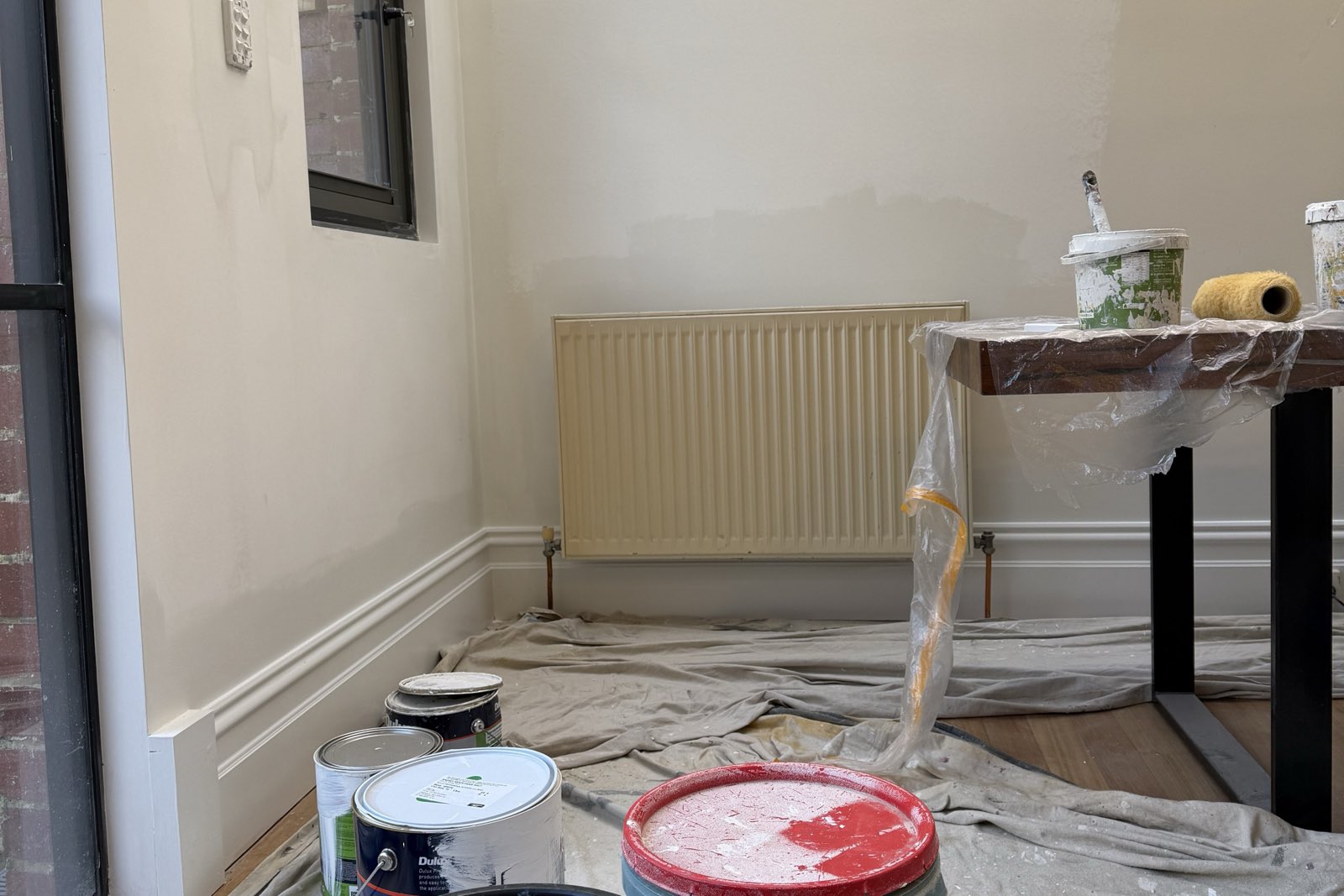
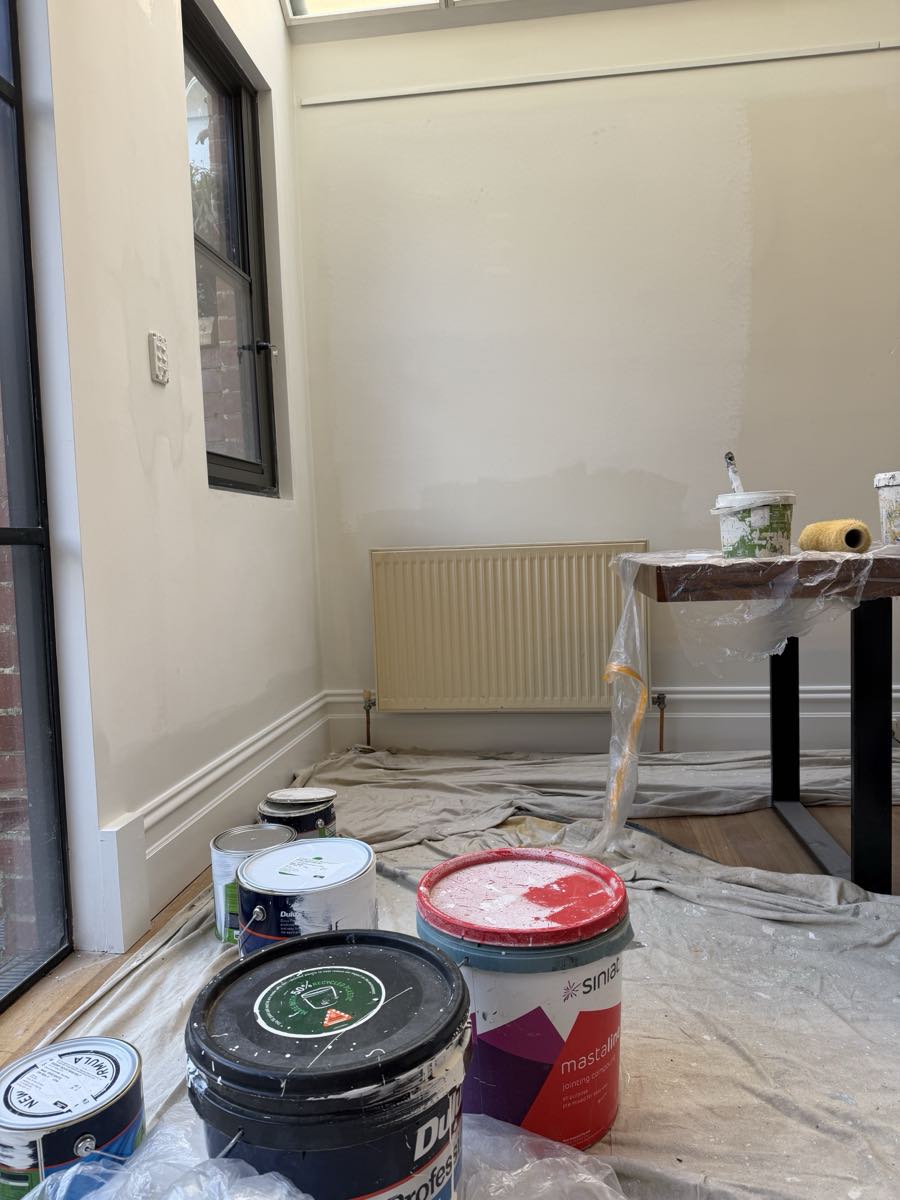
Covering protects larger areas from splashes and debris; masking protects edges and smaller details. The materials should suit the surface underneath, the painting method and how people will move through the home.
What is the difference between covering and masking?
For a lived-in Melbourne home, protection deserves a place in the quote alongside preparation and paint. A freshly painted wall is only part of the result: the floor beside it, the sofa in front of it and the window next to it also matter.
This guide explains what to discuss before an interior painting project, with practical questions for comparing the protection included in different quotes.
Covering means shielding a broad surface, such as a floor or piece of furniture. Masking means defining a paint boundary or protecting a detail, such as the edge of a window frame. Some tasks need both: the floor may need a protective covering while the junction beside the skirting needs careful masking.
Dulux's preparation guide recommends clearing movable items, covering larger furniture and masking edges that should remain unpainted. It is a useful starting point, but the protection plan still needs to fit the room.
interior painting project · Dulux interior preparation guidance
What should be protected before painting?
Use this checklist when discussing the work. These are planning questions, not a claim that every item is included in every painting quote.
An estimate based only on the wall area can leave these details unclear. Show the painter the access route as well as the room.
| Surface or item | What to agree before work starts |
|---|---|
| Timber, laminate or vinyl flooring | A covering compatible with the finish, protection at edges and a method of securing it without unsuitable adhesive |
| Carpet and rugs | Whether rugs will be removed, how carpet edges will be protected and which floor-protection products are suitable |
| Furniture and upholstery | Which items move, which stay covered and who handles heavy or delicate pieces |
| Windows, glass and hardware | Which faces are being painted and which seals, handles, hinges and glass areas remain unpainted |
| Benchtops and cabinetry | Protection for horizontal surfaces, doors and appliances beside the work |
| Hallways and access routes | How equipment reaches the room and how coverings will be maintained along that route |
| Exterior paths and adjacent property | What needs protection from the proposed application method, including nearby items outside the wall area |
How should floors be covered?
Start with the flooring type and its condition. Tell the painter if a floor has recently been installed, coated, polished or refinished. Ask whether the proposed protection and any adhesive are approved for that finish; do not assume one floor film or tape suits every material.
Discuss three separate needs: protection from paint, protection from debris and a stable working route. A covering that catches splashes may still need a different arrangement where equipment is moved repeatedly. Check whether spills can pass through the chosen material and how joins and edges will be managed.
For a narrow hallway or a room with several doorways, ask how the covering will stay in place as the work progresses. The protection should be checked during the job, not simply laid down at the start and forgotten.
Is plastic enough to protect furniture?
Plastic can protect furniture from splashes, but it does not replace a clear working space. Agree where furniture will sit, how it will be covered and whether the painter can reach the full wall without brushing against it.
Pack small personal items, valuables and fragile objects before the agreed work begins. Point out anything unusually heavy, fixed or delicate so handling can be discussed separately. Do not treat an empty-looking sheet over a sofa as evidence that the room is ready for every stage of preparation.
This article focuses on the protection itself; furniture responsibilities and room-use planning are covered in more detail in our occupied-apartment preparation guide.
occupied-apartment preparation guide
Which masking tape should be used?
Choose tape for the actual surface, its condition and the intended masking period. Tape suitable for glass may not suit a delicate painted finish. Outdoor exposure and recently painted surfaces also need specific product guidance. The ScotchBlue manufacturer guide distinguishes surface applications and cautions that some coatings can react with tape adhesive.
A useful question is: "Has this tape been checked for this finish?" Tape colour alone is not a product specification. Discuss a small, inconspicuous compatibility check where appropriate, especially if the existing coating is uncertain.
If you are unsure what coating is already on a surface, our guide to primer, undercoat and stain blocker choices explains how to assess it before masking or painting.
ScotchBlue masking guidance · primer, undercoat and stain blocker guide
When should masking tape come off?
Follow the instructions for the chosen tape and paint, including any maximum time the tape can remain on the surface. ScotchBlue advises removal when paint is dry to the touch; Dulux's general preparation guide describes removal before paint has dried completely. Those instructions are not a universal timer for every coating system.
Agree who will remove the masking and inspect the edges. Avoid leaving removal to someone who does not know which products were used. If the paint film bridges the tape edge or starts lifting, the removal method needs reassessment rather than a harder pull.
What changes when paint is sprayed?
Before agreeing to spraying, ask the painter to explain the protection boundary for that method. Identify the surfaces beyond the immediate wall or fence, where people will be, and what could be affected outside the work area.
For exterior work, discuss neighbouring windows, vehicles, outdoor furniture and planting as part of the assessment. For interiors, clarify which rooms or openings are included in the work zone. The application method should follow the conditions and scope of the job; photographs alone do not establish that spraying is suitable.
What belongs in the painting quote?
Ask for the quote or agreed scope to clarify:
For a home in Fitzroy, Brunswick or elsewhere in Melbourne, describe the actual layout rather than relying on the suburb to explain the job. A narrow terrace hallway, a furnished apartment and an empty room can require different arrangements. These are examples of planning considerations, not claims about a particular Pars project.
- The floors, furniture and fittings to be protected.
- Who clears small belongings and handles larger items.
- Any special requirements for delicate or recently finished surfaces.
- Protection of access routes and neighbouring areas where relevant.
- Who removes masking, clears coverings and checks the area at completion.
Common questions about covering and masking
Does cutting in neatly remove the need for floor protection?
No. A neat edge and a protected floor serve different purposes. The quote should address surrounding surfaces even where the painter plans to cut in with a brush.
Can the same tape be used everywhere?
Do not assume so. Check the tape's approved surfaces, exposure limits and compatibility with the existing finish. Recently painted or delicate surfaces need particular attention.
Is covering included in the painting price?
Check the written scope. Ask which areas are protected, who moves items and whether unusual access or specialist handling is included. A general reference to preparation may not answer those questions.
Should masking and floor protection stay in place overnight?
That depends on the products, work sequence and access needs. Ask how protection will be checked between work sessions and how essential routes will remain usable.
Discuss protection with Pars Painting Melbourne
When you request a painting quote, send Kian your suburb, the rooms or exterior surfaces involved and useful photos. Include the flooring, furniture and access route, and mention delicate finishes or items that need special handling.
For a suitable small job, photos can support an initial estimate. Larger or unclear work may need a visit. Kian confirms the final written quote after reviewing the scope, condition and access. Call 0402 242 442 to discuss your project.